
The Cask of Choice for Cult European Wineries
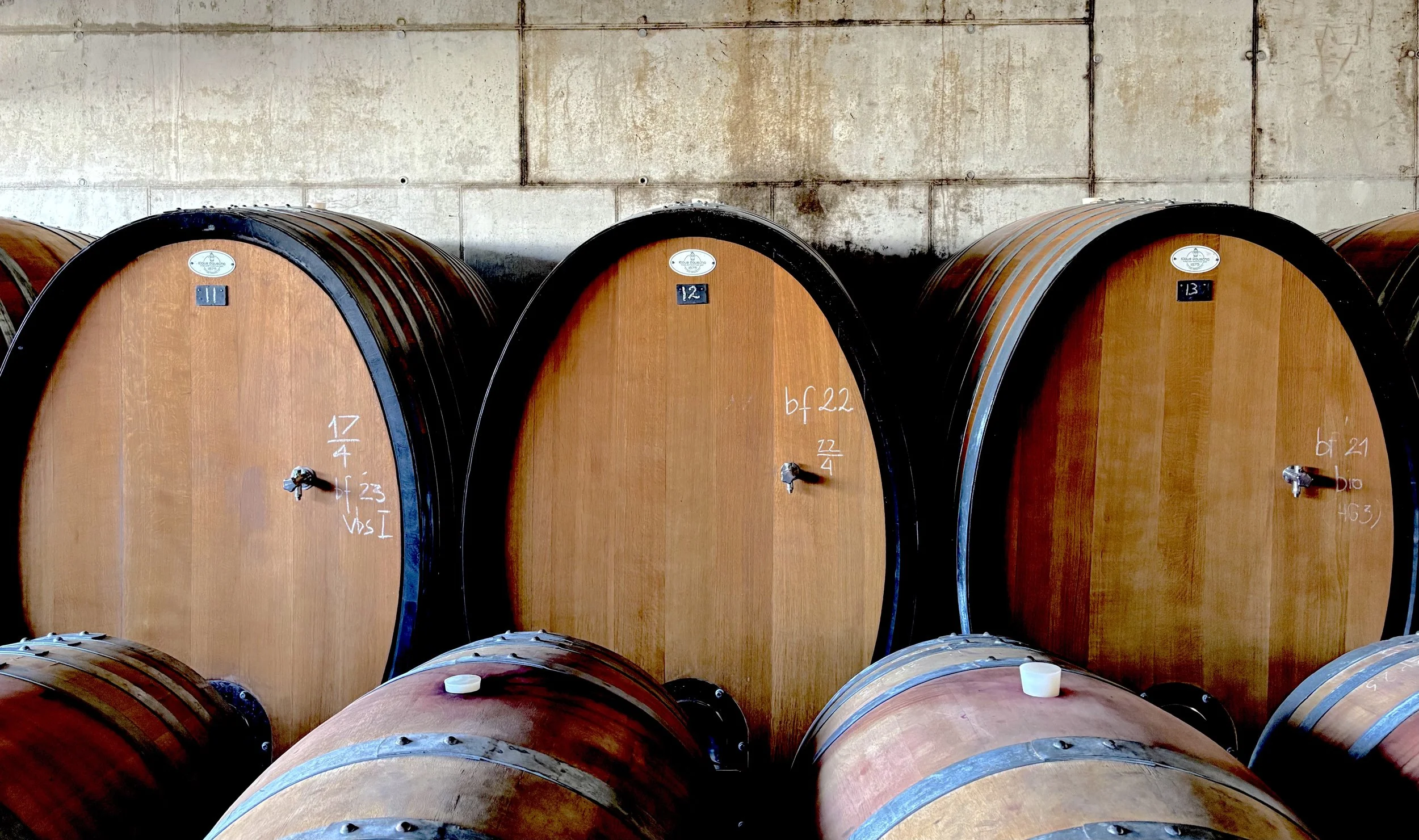
It is always interesting to see which wineries around the world are working with our cooperage partners. With Bossuet we find iconic chateaux in Bordeaux and Australian winemakers we idolized while working there. ECLAT counts many of our favorite South African winemakers as clients. Eric Millard has been embraced by the most famous of Burgundian domaines. It is the Pauscha family however who has developed the most diverse following from cult European wineries.
Presumably there are several factors that have led to this. For starters, the family has stayed the course for five generations. There are European cellars that have casks produced by multiple generations of Pauscha coopers. When you watch Jakob work, it is clear that this craft is a part of his being. He learned from his father, and his father learned from Jakob’s grandfather. The Klaus Pauscha mark on the top of the casks they produce reflects a tribute to the family history.
Pauscha casks are built by hand using venerable tools in the workshop adjacent to the family home. Using old methods, they coax the best from the oak. Toasting at Klaus Pauscha is time intensive - long and slow at low temperatures. - The same way it has always been done.
Most importantly perhaps, their casks bring something to wine that a discerning group of elite global winemakers seek – purity. Utilizing slow growing oak from Austria’s cool continental climate and aging it amongst the unique flora of the Lavanttal Alps, a spectacular expression of Quercus Petraea results.
33 year old Jakob Pauscha now leads the Klaus Pauscha cooperage. When we first met, he was 28 and had just unexpectedly lost his father and mentor. Watching him grow into the role over the last few years has been special. We are proud to offer you access to his family’s exceptional casks.
What European Pauscha clients say:
Sepp Muster, Weingut Muster - Styria, Austria: “We love Pauscha barrels because they work in a similar way to how we work with our wine. During processing, every effort is made to preserve the natural properties of the wood. This keeps the wood pores open and contributes to natural micro-oxidation, which also keeps the wine alive during storage. These are the best conditions for slow, long-lasting maturation in the bottle. Personal exchanges also show us how meticulously this product is crafted and how small nuances make all the difference.
Weingut Heinrich - Burgenland. Austria: “Our wines are not handled for months, even years, in our cellar and remain alive and evolve continuously. The wooden barrels and the coopers that produce them at Klaus Pauscha play a significant role. Together with time, wooden barrels lend our wines balance and structure and provide them with the natural quantity of air that they require to breathe and mature. Barrels shape wine and give it the necessary vitality and energy that is lacking in the sterility of stainless steel tanks.”
Matthew Fioretti, Cerbaiona - Montalcino, Italy: “For larger casks there is a simple reason why I purchase exclusively from Klaus Pauscha: i.) the level of craftsmanship is second to none; ii.) they take great care to make be-spoke modifications at the client’s request; iii.) the quality of the staves is good; iv.) they take their craft seriously and they are not promoting something that does not - and cannot exist; in a word, Klaus Pauscha is the most honest and genuine cooper of casks I have met - and they are very fine craftsmen.The latter point has been lost in much of viticulture and fine wine production. It is not easy to make a fine quality, traditional product - whether that be a cask or a wine. More than romantic tale, it is about being diligent, hard working, and meticulous. These are the qualities that Jacob Pauscha carries forth under his father’s name.”